
Château LATOUR
Classification:
Premier Grand Cru Classé, Pauillac AC (First-growth in 1855).
Average Production:
10,000 to 15,000 cases of grand vin. Note recent vintages have been at the lower end of this range.
Recent En-Primeur prices:
2008 - approx A$450 - $550
2007 - approx A$750 - $850
2006 - approx A$1,150 - $1,250
2005 - approx A$1,250 - $1,500
2004 - Approx A$350 - $400
Vineyards:
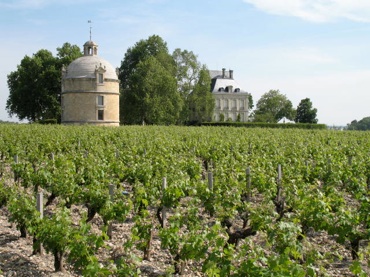
Approximately 160 acres (60 hectares) and 600,000 vines, planted to 80% Cabernet Sauvignon, around 18% Merlot and small quantities of Petit Verdot and Cabernet Franc. The heart of the estate is the 47 hectare (116 acre) vineyard l’Enclos, surrounding the Château and chais, whose vines average 50 years of age and which produce the grand vin. L’Enclos abuts the St.-Julien second-growth Léoville-Las-Cases to the south (separating both communes and Châteaux by a small drainage channel), and lie between the Gironde Estuary and Pichon Comtesse de Lalande to the north, up to the vineyards of Haut-Bages-Liberal.
The deep, free-draining gravelly clay and sandy soils enable l’Enclos to produce high-quality fruit in wet years, while the proximity to the Gironde protects from devastating frosts (such as in 1991). Throughout the subsoil, bands of clay allow for good moisture retention enabling the vines to withstand stress in hot and drought years. Additionally, a warmer microclimate than that of neighbouring vineyards allows Latour to harvest l’Enclos earlier than most others while attaining full physiological and phenolic ripeness.
Winemaking:
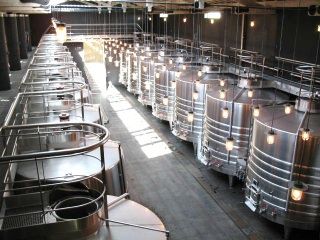
Harvest is generally completed in 15-20 days, utilizing around 200 pickers, and all grapes are destemmed and crushed, with each parcel fermented in 66 custom-made stainless steel tanks of varying capacity (from 12 to 166 hl) corresponding to vineyard plots. Malolactic fermentations are completed in barrel, which are a combination of Nevers and Alliers oak from ten coopers. The wine is racked every three months, and completed with a (six egg-white) fining prior to bottling. The grand vin sees 100% new oak each year, Les Forts de Latour around 50% and the third wine, the generic Pauillac de Latour perhaps 10%. Until the 1970s bottling was done barrel by barrel, today a 2,200hl blending tank is utilized.
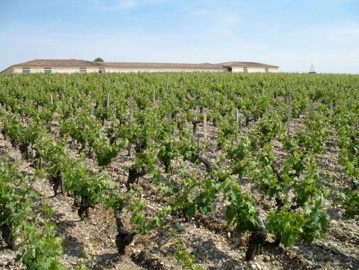
A second parcel of vines, Forts de Latour (so-named as most of its grapes produce that wine) averages 40-45 years and is located to the northwest, while further inland are two plots Petit Batailley and La Pinada. Each of the vineyards are replanted at a rate of approximately two percent each year. From 2002 it was decided that Cabernet Franc is not of sufficient quality and suitable character for the grand vin, and is being replaced with additional Cabernet Sauvignon and Petit Verdot.
Other wines:
Les Forts de Latour
Pauillac de Latour
In 2000 (with the 1998 vintage) a stringent quality-control program was introduced in which every single cork used by the Château is tested for cork taint – the theory being that there should never again be another bottle of ‘corked’ Latour. In light of this program, there are no plans for the introduction of any alternate closures.
Overview:
Château Latour is for many the epitome of great Bordeaux, famous the world over and revered for its power, complexity and elegance, not to mention longevity. It has a reputation not only for regularly making Bordeaux’s best wine of vintage, but for notably succeeding in the lesser years. It is this consistency regardless of vintage variation that lead many to nominate it as the region’s finest.
While there were vineyards at Latour in the 14th and 15th century (as well as a fort guarding against attack from the Gironde) Latour’s reputation was established in the late 17th century when it became part of the legendary Comte Alexandre de Ségur’s vineyard holdings (which included Lafitte and Calon at the time). Classified as a first-growth in the 1855 Classification, Latour has rarely looked backwards. In 1863 part of its annual production was château-bottled, and by the 1930s this was extended to include the entire production. By the 1950s ownership had multiplied through generational inheritance to nearly 70 stakeholders, and the inevitable occurred in 1962 with the property being sold to the British company Pearsons. Progress saw the planting of
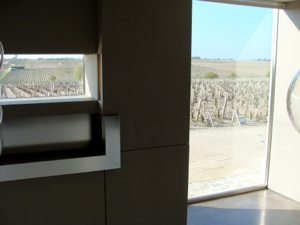
additional plots (specifically the Les Forts de Latour vineyard in 1963) and in 1964 stainless steel tanks were introduced. The jewel, l’Enclos had slowly been reduced to around half its capacity, and individual vines were painstakingly replanted. In 1993 French industrialist Francois Pinault purchased the property and has overseen (with his general manager, Frederic Engerer) its continued improvement, including the construction of a new chai, as well as mapping and soil analysis of l’Enclos’ 80 distinct plots. A museum or wine library is maintained, with 1863 being the oldest vintage remaining. While most are, not every vintage is represented however.
One further points worth noting - in my experience [of tasting barrel samples] there is no wine from Bordeaux, or indeed from any wine region in the world, that I tend to underestimate in terms of quality and potential, than Latour.
Click here for tasting notes.