
Bordeaux Vintages
By their very nature, vintage summaries or charts are both generalist and subjective. However, within these limitations they provide a useful snapshot of both the likely style and quality of a particular wine, as well as a guide as to its maturity and drinkability. In many cases, and especially with younger vintages, they refer to a wine’s overall potential rather than its present performance.
They are meant in no way to be definitive, and personal preference with respect to wine style is usually equally or more important than a wine’s overall quality in terms of derived pleasure.
Red Bordeaux
2009: Although still in its infancy, there is little doubt that the 2009 vintage is exceptional, with many wines likely to rival [if not surpass] the modern classics of 2005 and 2000, as well as the mature greats in 1982, 1961 and even 1928. Admittedly not as consistent as other great years, with some wines veering on over-ripeness and lacking balance. Yet the best, and there are many of them, combine uncommon intensity and power, with impressive freshness and minerality. Most surprisingly, the wines are very approachable, without the hard, tannic structure of similarly great vintages like 2005. They jury on how desperately consumers should seek them is out until the pricing is released however...
2008: A very difficult growing season - extremely cool and wet throughout summer, with significant rot throughout - was saved by an Indian summer beyond which even the most optimistic Bordealais could have dreamed of...for a month from early September the sun shone and the grapes managed to achieve good ripeness, whilst persistent breezes kept the rot at bay. For those with the resources and dedication to severely crop thin and remove damaged berries and bunches, it was possible to make very good wine indeed. By their very nature, the 2008s are something of a mixed bag, but are generally evolving very well in barrel and promise much.
2007: A long, cool and sometimes wet summer meant ripeness levels were poor even by the end of August, and many wondered whether the vintage would be a disaster. Thankfully September was for the most dry and reasonably warm, this Indian summer saving the red wines from oblivion. Fresh, pure and classical in style, the wines are (mostly) ripe, with crisp acidity and fine-yet-firm tannins. Sadly many wines were released at overly optimistic prices, so it is a vintage where good value can be difficult to find, but the wines themselves are, for the most part, delicious, finely structured wines perfect for short to medium-term cellaring. Classical ‘luncheon Clarets’.
2006: There are two standout features of this vintage: firstly their imposing, structured nature requiring many years of cellaring to allow the tannins to resolve themselves; and secondly their often frightening (release) prices - simply the most expensive young vintage of Bordeaux ever. Neither of these hallmarks suggest that this is not a vintage worth exploring, merely that one must be fully aware that immediate pleasure is unlikely, and that long-term cellaring is required to make sense from both an olfactory as well as financial point of view.
2005: In terms of overall consistency, this is without doubt the greatest vintage to date in Bordeaux. Whilst certain previous vintages may challenge it (think 2000, 1990, 1982, 1961 etc.) in terms of specific great wines, the sheer quantity of top wine produced in every major commune in 2005 means it stands out as the premier vintage. That said, the wines have unquestionably closed down now, and are unlikely to emerge from this ‘dumb’ phase for at least a decade, even for lesser cru classés. The sheer joy experienced tasting these wines en-primeur and upon their arrival has diminished. The bones of greatness are still there, they just need time to transform into mature beauty. One caveat - I have a stylistic questionmark over the level of ripeness of some St.-Emilions.
2004: One of the great value vintages, both upon release and today, in terms of classical style and drinking pleasure. Following the very modern, ‘new world’ styled 2003s, these were a return to traditional Bordeaux style, yet an improvement over early ‘average’ vintages of even a decade previous thanks to significant financial investment in the vineyards and wineries, as well as a more scientific, better-trained techniques employed during the winemaking and elevage process. Today the wines show balance between freshness and maturity, of ripe yet not overly-sweet fruit, and still promise further improvement in the next decade.
2003: A unique vintage, given the unprecedented climatic extremes the growing season bestowed, but perhaps a portent of a possible future, depending on one’s opinion of climate change! The summer heat killed an estimated 15,000 French citizens, and certainly did many Châteaux no favours, destroying many vines and producing unbalanced, ‘hot’-tasting wines of no freshness and sometimes schizophrenic levels of over-and-under ripeness. The heavier soils of the northern Médoc, particularly those properties in St.-Estèphe and Pauillac near the Gironde, tended to succeed surprisingly well, while other communes with less preserved ground water (such as Margaux and St.-Emilion) had far fewer successes. Of course, there are always exceptions, and Châteaux Margaux and Ausone were particularly noteworthy for their wines this year.
There is great conjecture as to the longevity of even the best wines of this vintage. Some argue that, like other incredibly hot vintages such as 1928, 1947 and 1959, well-balanced wines now will evolve into well-balanced stars decades hence, while others claim that the wines are so forward, ripe and of such low acidity that they will all be best consumed within little more than a decade. To me, the top wines have actually retreated from their flamboyant, opulent youth and have actually closed down both aromatically and on the palate. Yes, they are not as delicious today as they were four years ago. Yet I have no doubt that the best will re-emerge, perhaps in a decade or more, and deliver on their early promise. On the other hand, the lesser-lights of this most variable vintage are probably already at their peak, and I would not bother inflicted further ageing upon them, given the limited likelihood of improvement.
Click here to return to top.
Click here for earlier red Bordeaux vintages.
Click here for dry white Bordeaux vintages.
Click here for sweet white Bordeaux vintages.
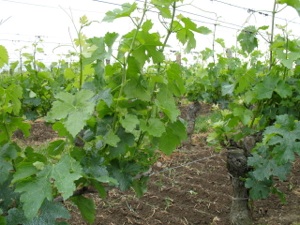
2002: A very cold and dry winter lead into a relatively cool but still quite dry summer. Grapes ripen slowly, thankfully in the absence of excessive rain, and harvest conditions were good. The resulting wines are ripe, albeit not overly so, with quite good density and flesh. They are attractive without being flashy, mostly shorter-term wines. Best of all, they were released at very reasonable prices - indeed, the least expensive of the entire decade. Many of the wines are now mature, or at least not in need of further ageing, with few exceptions. Margaux, Pessac-Leognan and Pauillac tended to produce the best wines.
2001: Destined to be overshadowed by the 2000s, there were a large number of great wines made in this large volume vintage. Generally a warm and wet vintage (often disastrous), it was the very cool, dry September that gave this year’s wines their trademark freshness. Combined with substantial tannins and good flesh, this freshness makes many wines very attractive. The right-bank did extremely well - but there are good wines (albeit no blockbusters) to be found throughout the Médoc. Few wines are close to maturity yet, and despite being impressive, they are certainly lighter and not as great as the preceding vintage.
2000: There was always going to be an element of romanticism about the ‘millennial’ vintage - the fact that the resultant wines were generally outstanding did nothing to dampen enthusiasm, and stratospheric price, for these wines. All of the red-producing areas of Bordeaux excelled, and really, unless a winemaker made an error, it was difficult to make a poor wine this year.
Surprisingly, weather conditions were not ideal. Spring in particular was difficult, with rampant mildew early in the season, and highly variable temperatures through June. Summer started cool, and with considerable rain, so that by the end of July, portents were poor for the quality of the harvest. However from the end of July until October when harvest was complete, things stayed warm, hot and mostly dry - in fact, September (potentially the most disastrous month for rainfall) was one of the driest on record, and nearly everyone harvested grapes in near-perfect conditions, fully ripe and rot-free.
The wines themselves are very powerful - concentrated and quite tannic - and certainly will be very long-lived. Even ten years on, the wines are still (mostly) frightfully closed and ungiving. Yet the quality is undeniably high, with ripe fruit, dense and concentrated backbones, and long, complex finished on the wines. All communes excelled, and many lower-ranked wines, as well as wines from lesser communes, are worth seeking in 2000, especially as they may achieve maturity quicker.
Released at very high prices, they have increased further (substantially) since release, and the combination of longevity, excellent quality, and a magical, near-mythical vintage status, will ensure that they will always be amongst the most expensive vintages to purchase forevermore.
1999: